>The Symmetrical Triangle Chart Pattern: Psychology, Trading Strategies, and Risk Management
1. Introduction to the Symmetrical Triangle Pattern
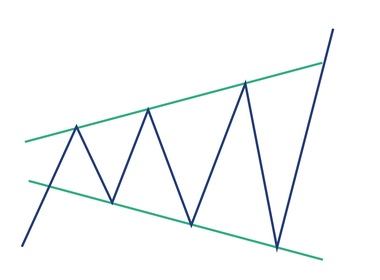
The Symmetrical Triangle chart pattern is a bilateral formation that can be either bullish or bearish.
It is most often a continuation pattern, meaning the market usually resumes in the direction of the prevailing trend.
Traders recognize it by converging trend lines formed by lower highs and higher lows.
2. Anatomy of the Symmetrical Triangle
Resistance Line: Descending line connecting lower peaks.
Support Line: Ascending line connecting higher troughs.
Convergence: Price compresses as the two lines meet.
Breakout: Occurs when price breaks above resistance (bullish) or below support (bearish).
3. Market Psychology Behind Symmetrical Triangles
Compression Phase: Buyers and sellers battle, creating lower highs and higher lows.
Indecision: Market participants hesitate, waiting for confirmation.
Breakout Phase: One side dominates, leading to a sharp move in the breakout direction.
This reflects investor psychology:
Uncertainty and indecision.
Gradual buildup of pressure.
Sudden release of momentum once breakout occurs.
4. How to Trade the Symmetrical Triangle Pattern
Entry Strategies
Breakout Entry: Enter long if price breaks resistance, short if price breaks support.
Retest Entry: Enter after price retests breakout level.
Aggressive Entry: Trade within the triangle anticipating breakout direction (higher risk).
Stop-Loss Placement
Below support for bullish trades.
Above resistance for bearish trades.
Profit Targets
Measure height of triangle at widest point.
Project move equal to that height after breakout.
5. Common Mistakes Traders Make
Entering before breakout confirmation.
Misidentifying pennants or wedges as triangles.
Ignoring volume signals.
Over-leveraging positions.
6. Advanced Trading Strategies
Indicator Confirmation: Use RSI, MACD, or moving averages.
Multi-Timeframe Analysis: Confirm triangle on higher timeframes.
Volume Analysis: Rising volume during breakout validates the pattern.
7. Symmetrical Triangle vs. Ascending vs. Descending Triangles
| Feature | Symmetrical Triangle | Ascending Triangle | Descending Triangle |
|---|---|---|---|
| Trend Signal | Bilateral (bullish or bearish) | Bullish continuation | Bearish continuation |
| Shape | Converging highs and lows | Horizontal resistance + rising support | Horizontal support + falling resistance |
| Psychology | Indecision | Buyer strength | Seller strength |
8. Risk Management in Symmetrical Triangle Trading
Always use stop-loss orders.
Avoid trading without volume confirmation.
Manage position size carefully.
Diversify trades to reduce exposure.
9. Case Studies: Symmetrical Triangle in Different Markets
Stocks: Common during consolidation phases before earnings-driven breakouts.
Forex: Appears in volatile currency pairs with uncertain direction.
Crypto: Frequently seen during sideways markets before sharp moves.
10. Conclusion
The Symmetrical Triangle chart pattern is a versatile bilateral formation. By understanding its psychology and applying disciplined trading strategies, traders can capitalize on both bullish and bearish opportunities. Success requires patience, confirmation, and strict risk management.