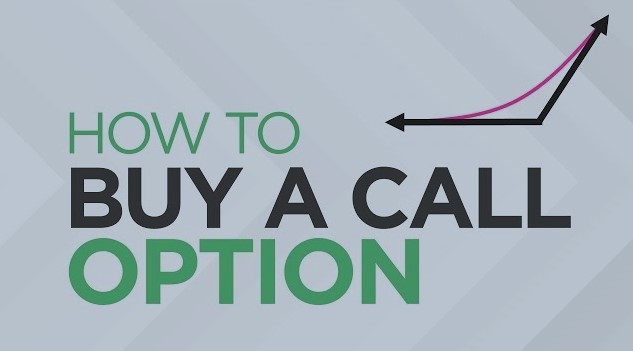
Buying a Call Option: A Complete Guide for Traders
Introduction
Options trading is one of the most versatile tools available to modern traders. Among the different strategies, buying a call option stands out as a powerful way to participate in potential upside movements of a stock or index without committing large capital upfront. This article explores the concept in depth, covering definitions, mechanics, profit and loss scenarios, breakeven analysis, and practical examples. By the end, you’ll have a clear understanding of how call options work, when to use them, and how to manage risks effectively.
1. What is a Call Option?
A call option is a financial contract that gives the buyer the right, but not the obligation, to purchase an underlying asset (such as a stock, index, or commodity) at a predetermined price (called the strike price) within a specified time frame.
- Buyer of a call option: Pays a premium to acquire the right to buy.
- Seller (writer) of a call option: Receives the premium but takes on the obligation to sell if the buyer exercises the option.
The beauty of call options lies in their asymmetric payoff structure: limited risk (the premium paid) but potentially unlimited profit if the underlying asset rises significantly.
2. Why Buy a Call Option?
Buying a call option makes sense when you expect the underlying asset’s price to rise. Instead of buying the stock outright, which requires significant capital and exposes you to full downside risk, you can pay a relatively small premium to capture upside potential.
Advantages:
- Limited risk (loss restricted to premium paid).
- Leverage: Control a large position with small capital.
- Flexibility: Choose strike prices and expiries to suit your outlook.
- No margin requirement for buyers.
Disadvantages:
- Time decay: Options lose value as expiry approaches.
- Premium cost: If the asset doesn’t move enough, the option may expire worthless.
3. Key Terms in Call Options
- Strike Price: The price at which the buyer can purchase the asset.
- Premium: The cost of buying the option.
- Spot Price: Current market price of the underlying asset.
- Expiry Date: The last date on which the option can be exercised.
- Intrinsic Value (IV): The amount by which the option is in-the-money.
- Time Value: Extra premium paid for the possibility of favorable movement before expiry.
4. Profit and Loss Scenarios
The payoff for a call option buyer depends on the relationship between the spot price and the strike price at expiry.
- If spot price < strike price → Option expires worthless. Loss = premium paid.
- If spot price = strike price → No intrinsic value. Loss = premium paid.
- If spot price > strike price → Option has intrinsic value. Profit = (Spot − Strike − Premium).
Example:
Suppose you buy a call option with:
Strike Price = ₹2050
Premium = ₹6.35
Spot Price at expiry = ₹2080
Profit = (2080 − 2050) − 6.35 = ₹23.65
This demonstrates how profits grow as the spot price rises above the strike.
5. Breakeven Point
The breakeven point is the price at which the buyer neither makes a profit nor suffers a loss.
Formula:
Breakeven = Strike Price + Premium Paid
Example:
Strike = ₹2050, Premium = ₹6.35
Breakeven = 2050 + 6.35 = ₹2056.35
Only above this level does the buyer start making net profits.
6. Payoff Characteristics
- Maximum Loss: Limited to premium paid.
- Maximum Profit: Unlimited as the underlying price can rise indefinitely.
- Risk-Reward Profile: Attractive for bullish traders who want leveraged exposure.
This makes call options a favorite among traders expecting sharp upward moves.
7. Practical Example: Bajaj Auto Case
Imagine Bajaj Auto trading at ₹2026.9. You buy a 2050 strike call option at a premium of ₹6.35.
- If price falls below 2050 → Maximum loss = ₹6.35.
- If price rises to 2100 → Profit = (2100 − 2050) − 6.35 = ₹43.65.
- Breakeven = ₹2056.35.
This example highlights how limited risk and unlimited profit potential coexist in call option buying.
8. General Formula for P&L
P&L = max(0, Spot Price − Strike Price) − Premium Paid
This formula applies universally to call option buyers.
9. When to Buy Call Options
- Bullish Outlook: Expecting strong upward movement.
- Event-driven trades: Earnings announcements, policy changes, or sector news.
- Hedging: Protecting short positions in futures or stocks.
- Speculation: Leveraging small capital for potentially large gains.
10. Risks and Considerations
- Time Decay (Theta): Value erodes as expiry nears.
- Volatility Impact (Vega): Higher volatility increases premiums.
- Liquidity: Illiquid options may have wide bid-ask spreads.
- Over-leverage: Temptation to buy too many contracts can magnify losses.
11. Strategies Using Call Options
- Covered Call: Holding stock and selling call options.
- Bull Call Spread: Buying one call and selling another at higher strike.
- Protective Call: Hedging short positions.
12. Visualizing Payoff
The payoff graph shows:
- Flat line (loss = premium) below strike.
- Rising line beyond breakeven.
- Unlimited profit potential as price rises.
This visualization helps traders grasp the risk-reward dynamics instantly.
13. Conclusion
Buying a call option is a strategic way to participate in bullish moves with limited downside risk. It is ideal for traders who want leverage, flexibility, and defined risk. However, success requires understanding of strike selection, expiry dynamics, and market conditions. With disciplined use, call options can be a powerful addition to any trading toolkit.