Comprehensive Guide to Call and Put Options
Options trading is one of the most versatile financial instruments available to traders and investors. Unlike stocks, which represent ownership in a company, options are contracts that give the holder the right—but not the obligation—to buy or sell an underlying asset at a predetermined price within a specified time frame. The two fundamental building blocks of options are calls and puts. Understanding these contracts is essential for anyone looking to navigate the derivatives market effectively.
1. What Are Options?
Options are derivative contracts, meaning their value is derived from an underlying asset such as stocks, indices, commodities, or currencies. Each option contract specifies:
- Underlying asset (e.g., shares of a company)
- Strike price (the agreed price for buying or selling)
- Expiration date (the last day the option can be exercised)
- Premium (the cost of purchasing the option)
Options are divided into two categories:
- Call Options: Right to buy the asset
- Put Options: Right to sell the asset
2. Call Options Explained
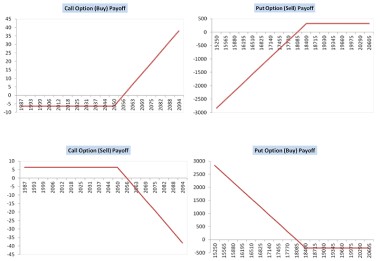
A call option gives the buyer the right, but not the obligation, to purchase the underlying asset at the strike price before expiration. Traders buy calls when they expect the asset’s price to rise.
Example:
- Strike price: ₹100
- Premium: ₹5
- Expiration: 1 month
If XYZ rises to ₹120, you can exercise the option to buy at ₹100 and immediately sell at ₹120, making a profit (minus the premium). If the stock stays below ₹100, you let the option expire, losing only the premium.
3. Put Options Explained
A put option gives the buyer the right, but not the obligation, to sell the underlying asset at the strike price before expiration. Traders buy puts when they expect the asset’s price to fall.
Example:
- Strike price: ₹200
- Premium: ₹8
- Expiration: 1 month
If ABC falls to ₹170, you can sell at ₹200, profiting from the difference (minus the premium). If the stock stays above ₹200, the option expires worthless.
4. Key Differences Between Calls and Puts
| Feature | Call Option | Put Option |
|---|---|---|
| Right | Buy asset | Sell asset |
| Used when | Expect price rise | Expect price fall |
| Risk | Limited to premium | Limited to premium |
| Profit potential | Unlimited | Limited (asset can’t fall below zero) |
5. Why Trade Options?
- Leverage: Control large positions with small capital
- Flexibility: Combine calls and puts for complex strategies
- Hedging: Protect portfolios against adverse price movements
- Income generation: Earn premiums by writing options
6. Option Premiums and Pricing
The premium is the price paid to buy an option. It consists of:
- Intrinsic value: Difference between strike price and market price
- Time value: Value of holding the option until expiration
- Volatility: Higher volatility increases premiums
7. Strategies Using Call and Put Options
Bullish Strategies
- Buying Calls: Profit from rising prices
- Bull Call Spread: Buy one call, sell another at higher strike
Bearish Strategies
- Buying Puts: Profit from falling prices
- Bear Put Spread: Buy one put, sell another at lower strike
Neutral Strategies
- Straddle: Buy both call and put at same strike
- Strangle: Buy call and put at different strikes
Income Strategies
- Covered Call: Hold stock and sell call option
- Cash-Secured Put: Sell put option while holding cash to buy stock if assigned
8. Risks in Options Trading
- Time decay: Options lose value as expiration approaches
- Volatility risk: Sudden market changes affect premiums
- Liquidity risk: Some options may have low trading volume
- Assignment risk: Sellers may be forced to fulfill contracts
9. Practical Applications
- Hedging portfolios against downturns
- Speculating on short-term price movements
- Generating passive income through option writing
- Arbitrage opportunities in mispriced contracts
10. Conclusion
Call and put options are the foundation of derivatives trading. Mastering their mechanics allows traders to design strategies for any market condition—bullish, bearish, or neutral. While they provide leverage and flexibility, traders must respect the risks and use disciplined risk management.