Comprehensive Guide to Nifty Futures Trading
Introduction
Within India’s derivatives market, Nifty Futures hold a unique and dominant position. They are among the most liquid contracts globally, ranking in the top ten index futures traded worldwide. For traders, investors, and analysts, understanding Nifty Futures is essential because they provide exposure to the broader Indian economy through the Nifty 50 index. This guide explores the fundamentals, mechanics, benefits, risks, and strategies associated with Nifty Futures in detail, offering a complete educational resource for beginners and experienced traders alike.
1. What Are Nifty Futures?
Nifty Futures are derivative contracts that derive their value from the Nifty 50 Index, which represents 50 of India’s largest and most actively traded companies across diverse sectors.
Underlying Asset: The Nifty 50 Index.
Contract Value: Futures Price × Lot Size.
Lot Size: Currently 75 units per contract (subject to periodic revision by NSE).
Expiry Variants: Current month, mid-month, and far-month contracts.
For example, if the Nifty Futures price is ₹11,484.9 and the lot size is 75, the contract value equals ₹861,367. This illustrates how futures magnify exposure compared to trading individual stocks.
2. Spot Price vs Futures Price
The spot price refers to the current value of the Nifty Index in the cash market. The futures price is slightly different due to the futures pricing formula, which incorporates factors like interest rates, dividends, and time to expiry.
If the spot rises, futures typically rise.
If the spot falls, futures decline.
The difference between spot and futures is known as premium or discount.
This variance is natural and reflects market expectations.
3. Margin Requirements
Trading Nifty Futures requires margins, which act as collateral. Brokers like Zerodha provide calculators to determine margin needs.
NRML (Normal Margin): Around ₹68,810.
MIS (Intraday Margin): Around ₹24,083.
BO & CO (Bracket/ Cover Orders): Around ₹12,902.
Margins allow traders to control large positions with relatively smaller capital, but they also introduce leverage risks.
4. Liquidity and Impact Cost
Liquidity is one of the strongest advantages of Nifty Futures. High liquidity ensures easy entry and exit with minimal slippage.
Impact Cost: The hidden cost of executing trades due to bid-ask spreads.
Formula:
Impact Cost = (Actual Buy Price – Ideal Price) / Ideal Price × 100
For example, buying 350 shares of Infosys at slightly varying prices results in an impact cost of 0.012%. Lower impact cost indicates higher liquidity.
5. Why Trade Nifty Futures?
Diversification
Unlike single stock futures, Nifty Futures represent a basket of 50 companies. This diversification reduces unsystematic risk (company-specific risk) and leaves traders exposed only to systematic risk (market-wide movements).
Hard to Manipulate
Individual stocks can be manipulated, but the Nifty Index reflects collective movements of top companies, making manipulation nearly impossible.
Lower Margins
Margins for Nifty Futures are significantly lower compared to individual stock futures, making them cost-effective.
Technical Analysis Friendly
Because of high liquidity, Nifty Futures respond well to technical analysis tools like moving averages, RSI, MACD, and candlestick patterns.
Lower Volatility
Annualized volatility of Nifty Futures is around 16–17%, compared to 30% or more for individual stocks like Infosys. This makes them relatively stable instruments.
6. Key Concepts in Nifty Futures
Round Trip Trade
A round trip trade involves buying at the best available sell price and immediately selling at the best available buy price. This always results in a small loss due to the bid-ask spread, which is essentially the impact cost.
Premium and Discount
Premium: Futures trade above spot.
Discount: Futures trade below spot.
These reflect market sentiment and expectations.
Leverage
Nifty Futures offer leverage of 8–9x. For example, if Nifty is at 18,700 with a lot size of 50, the contract value is ₹935,000. With a margin of ₹106,000, traders gain amplified exposure. A 1% move in Nifty translates to an 8–9% change in P&L.
7. Strategies for Trading Nifty Futures
Hedging
Investors use Nifty Futures to hedge portfolios against market downturns. For example, if holding large-cap stocks, shorting Nifty Futures can offset potential losses.
Arbitrage
Traders exploit price differences between spot and futures markets. If futures trade at a premium, one can sell futures and buy the underlying stocks.
Speculation
Directional traders use Nifty Futures to bet on market movements. For instance, buying futures when expecting bullish trends.
Synthetic Futures
By combining options (buying ATM call and selling ATM put), traders can replicate futures payoffs. However, plain futures are often cheaper and more straightforward.
8. Risks in Nifty Futures
Leverage Risk: Amplified gains but also amplified losses.
Margin Calls: Daily mark-to-market adjustments may require additional funds.
Volatility: Sudden market swings can erode capital quickly.
Liquidity in Other Contracts: While Nifty Futures are liquid, some stock futures may not be.
9. Technical Analysis Applications
Nifty Futures are ideal for applying technical analysis due to their liquidity. Popular methods include:
Trend Following: Using moving averages to identify long-term trends.
Momentum Trading: Employing RSI or MACD to capture short-term moves.
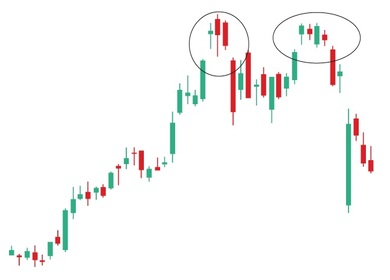
Candlestick Patterns: Recognizing reversal signals like Doji, Hammer, or Engulfing.
Support and Resistance: Identifying key levels for entry and exit.
10. Practical Considerations
Expiry: Nifty Futures expire on the last Thursday of each month.
Backtesting: Strategies should be tested on historical data before live trading.
Brokerage Costs: Frequent trading can accumulate significant costs.
Stop Loss Orders: Essential to manage risk, though not foolproof against gaps.
11. Broader Economic Significance
Nifty Futures are not just trading instruments; they reflect broader economic sentiment. Since the Nifty 50 covers diverse sectors—IT, banking, energy, FMCG—the futures contract acts as a barometer of India’s economic health.
Rising Nifty Futures indicate optimism.
Falling Nifty Futures suggest caution or pessimism.
12. Conclusion
Nifty Futures combine liquidity, diversification, and cost-effectiveness, making them one of the most attractive instruments in India’s derivatives market. Whether for hedging, speculation, or arbitrage, they provide opportunities for traders at all levels. However, leverage and volatility demand disciplined risk management. By mastering concepts like impact cost, margin requirements, and technical analysis, traders can harness the full potential of Nifty Futures.