Getting Started with Candlestick Patterns in Technical Analysis
Introduction
Trading is not just about numbers; it’s about understanding how those numbers reflect human behavior. One of the most powerful tools for traders is the candlestick chart. Candlesticks provide a clear picture of price movement and help traders identify opportunities.
This article explains the basics of candlestick patterns, the assumptions behind them, and how traders can use these patterns to make smarter decisions.
Why History Matters in Trading
A core belief in Technical Analysis is that history tends to repeat itself. When certain conditions appear in the market, traders expect similar outcomes to occur again.
For example:
- If a stock falls for several days in a row but then shows signs of slowing down, traders may anticipate a reversal.
- When the same situation happens months later, the expectation is that the market will behave in a similar way.
This repetition forms the foundation of candlestick analysis. Patterns that worked in the past are likely to work again, provided the conditions are similar.
What Are Candlestick Patterns?
Candlestick patterns are visual signals formed on price charts. They help traders understand whether buyers or sellers are in control.
- Single candlestick patterns: Formed by one candle. Examples include Doji, Hammer, and Marubozu.
- Multiple candlestick patterns: Formed by two or more candles. Examples include Engulfing, Harami, Morning Star, and Evening Star.
Each pattern tells a story about market psychology — whether traders are confident, fearful, or undecided.
Single Candlestick Patterns
1. Marubozu
- Bullish Marubozu: Strong buying pressure, no shadows, price closes at the high.
- Bearish Marubozu: Strong selling pressure, price closes at the low.
2. Doji
- Shows indecision.
- Opening and closing prices are almost equal.
- Signals possible reversal or pause in trend.
3. Hammer
- Appears after a downtrend.
- Small body with long lower shadow.
- Suggests buyers are stepping in.
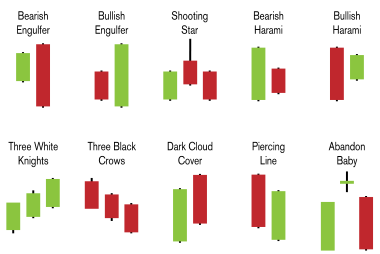
4. Shooting Star
- Appears after an uptrend.
- Small body with long upper shadow.
- Suggests sellers are gaining control.
Multiple Candlestick Patterns
1. Engulfing Pattern
- Bullish Engulfing: A large green candle fully covers the previous red candle.
- Bearish Engulfing: A large red candle covers the previous green candle.
2. Harami
- Bullish Harami: A small green candle inside a large red candle.
- Bearish Harami: A small red candle inside a large green candle.
3. Morning Star
- Three-candle pattern signaling bullish reversal.
- First candle is bearish, second is indecisive, third is strong bullish.
4. Evening Star
- Opposite of Morning Star.
- Signals bearish reversal after an uptrend.
Assumptions Specific to Candlesticks
Candlestick analysis works on a few important assumptions:
Buy strength, sell weakness
- Strength is shown by bullish candles.
- Weakness is shown by bearish candles.
- Traders should align with the dominant force.
Be flexible with patterns
- Real markets don’t always produce textbook patterns.
- Minor variations are acceptable, but traders must verify signals carefully.
Look for prior trend
- A bullish pattern is meaningful only if it follows a bearish trend.
- A bearish pattern is valid only if it follows a bullish trend.
Why Candlesticks Are Powerful
- They combine price action and psychology in one visual.
- They provide both entry points and stop-loss levels.
- They help traders build a complete view of the market.
- They are easy to learn and apply across different assets (stocks, forex, commodities).
Practical Applications
Intraday Trading
- Candlesticks help identify quick reversals.
- Traders use 5-minute or 15-minute charts.
Swing Trading
Patterns like Engulfing or Morning Star guide trades lasting days or weeks.
Risk Management
Candlesticks suggest where to place stop-loss orders.
Example: In a Hammer pattern, the low of the shadow can be the stop-loss.
Common Mistakes Beginners Make
- Ignoring prior trend: Applying a bullish pattern in an already bullish market leads to false signals.
- Over-reliance on one pattern: No single pattern works all the time.
- Neglecting volume: Patterns are stronger when confirmed by high trading volume.
- Not practicing enough: Candlestick reading improves only with experience.
Tips for Learning Candlesticks
- Start with daily charts before moving to intraday.
- Focus on a few patterns instead of trying to learn all at once.
- Use demo accounts or paper trading to practice.
- Combine candlestick signals with support and resistance levels.
- Keep a trading journal to track which patterns work best.
Key Takeaways
- Candlestick patterns are essential tools in Technical Analysis.
- They rely on assumptions such as history repeating and prior trend importance.
- Single and multiple candlestick patterns reveal trader psychology.
- Flexibility and risk management are crucial for success.
- Beginners should practice regularly and avoid overcomplicating charts.
Conclusion
Candlestick charts are more than just visuals; they are a language of the market. By learning to read them, traders can understand the balance between buyers and sellers, anticipate reversals, and manage risk effectively.
While no pattern guarantees success, candlesticks provide a structured way to analyze markets. With practice, discipline, and patience, traders can use these patterns to improve their decision-making and achieve consistent results.