Iron Condor Options Strategy: A Complete Guide for Traders
Options trading is often seen as a complex arena reserved for seasoned professionals. Yet, with the right strategies, even retail traders can manage risk effectively while aiming for consistent returns. One such strategy is the Iron Condor, a four-legged options setup that balances risk and reward by combining elements of both spreads and strangles.
This guide will walk you through the Iron Condor in detail—its structure, mechanics, advantages, disadvantages, and practical applications. By the end, you’ll understand how to deploy this strategy, when it works best, and how to avoid common pitfalls.
1. What is an Iron Condor?
An Iron Condor is a market-neutral options strategy designed to profit when the underlying asset trades within a defined range. It involves selling one out-of-the-money (OTM) call and put, while simultaneously buying further OTM options for protection.
In simple terms:
- You sell a call and sell a put closer to the current price (short strangle).
- You buy a call and buy a put further away to cap potential losses.
This creates a “condor-like” payoff diagram—flat in the middle, with wings on both sides.
2. Structure of an Iron Condor
The Iron Condor consists of four legs:
- Sell one OTM Call (closer to current price)
- Buy one further OTM Call (higher strike, hedge)
- Sell one OTM Put (closer to current price)
- Buy one further OTM Put (lower strike, hedge)
Example:
Suppose Nifty is trading at 10,000.
- Sell 10,100 Call
- Buy 10,300 Call
- Sell 9,800 Put
- Buy 9,600 Put
This creates a defined profit zone between 9,800 and 10,100, with capped losses beyond 9,600 and 10,300.
3. Payoff Characteristics
The Iron Condor has a limited profit and limited loss profile.
Maximum Profit: Net premium received from selling the options.
Maximum Loss: Difference between strikes (spread width) minus net premium.
Breakeven Points:
- Lower Breakeven = Short Put Strike – Net Premium
- Upper Breakeven = Short Call Strike + Net Premium
This makes the Iron Condor attractive for traders who expect low volatility and range-bound movement.
4. Why Use an Iron Condor?
The Iron Condor is popular because it allows traders to:
- Capitalize on time decay (theta)
- Define risk clearly
- Earn consistent returns
- Lower margin requirements
5. Iron Condor vs. Short Strangle
A short strangle involves selling an OTM call and put without protection. While profitable in range-bound markets, it carries unlimited risk if the market moves sharply.
The Iron Condor improves upon this by adding protective long options, reducing risk at the cost of lower profit potential.
| Feature | Short Strangle | Iron Condor |
|---|---|---|
| Risk | Unlimited | Limited |
| Margin | High | Lower |
| Profit Potential | Higher | Moderate |
| Stress Level | High | Manageable |
6. When to Deploy an Iron Condor
The Iron Condor works best in:
- Low volatility environments
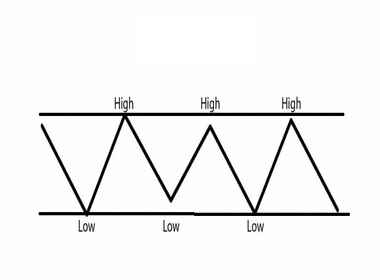
- Range-bound markets
- Periods after major events
- Indices or liquid stocks
Avoid deploying Iron Condors during:
- High volatility spikes
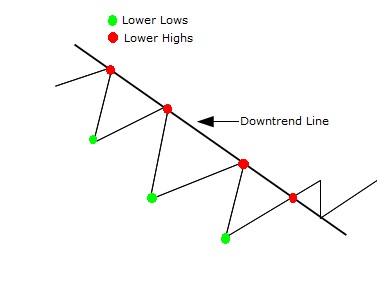
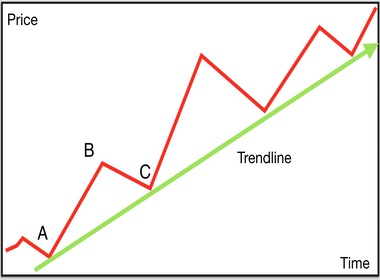
- Trending markets
- Illiquid options
7. Step-by-Step Guide to Executing an Iron Condor
- Identify the underlying asset.
- Analyze volatility.
- Select strikes.
- Check risk-reward ratio.
- Place trades in sequence.
- Monitor position.
8. Adjustments to Iron Condor
- Rolling strikes
- Adding spreads
- Closing one side
9. Advantages of Iron Condor
- Defined risk
- Lower margin requirement
- Flexibility
- Profit from time decay
- Neutral outlook
10. Disadvantages of Iron Condor
- Limited profit potential
- Requires monitoring
- Execution complexity
- Not suitable for beginners
11. Risk Management in Iron Condor
- Position sizing
- Stop-loss rules
- Diversification
- Avoid event days
12. ROI Considerations
While absolute profits may seem lower, ROI often favors Iron Condors.
Example:
- Short Strangle ROI = 16%
- Iron Condor ROI = 21%
13. Practical Example
Let’s assume Nifty is at 10,000.
- Sell 10,100 CE at ₹145
- Buy 10,300 CE at ₹77
- Sell 9,800 PE at ₹165
- Buy 9,600 PE at ₹105
Net Premium Received = ₹128
Max Profit = ₹9,634
Max Loss = ₹5,366
Margin Required = ₹44,303
14. Iron Condor vs. Iron Butterfly
| Feature | Iron Condor | Iron Butterfly |
|---|---|---|
| Profit Zone | Wider | Narrower |
| Premium | Lower | Higher |
| Risk | Lower | Higher |
| Best Use | Sideways markets | Very stable markets |
15. Common Mistakes to Avoid
- Choosing illiquid strikes
- Ignoring volatility
- Over-leveraging
- Holding till expiry blindly
16. Advanced Tips
- Use weekly options
- Combine with technical analysis
- Deploy multiple Iron Condors
- Track Greeks
Conclusion
The Iron Condor is a powerful strategy for traders seeking consistent returns in range-bound markets. By combining short strangles with protective long options, it balances risk and reward effectively. While profits are capped, the peace of mind from defined risk makes it attractive for retail traders.
Mastering the Iron Condor requires practice, patience, and disciplined risk management. With proper execution, it can become a cornerstone of your options trading toolkit.