Introduction
Moving averages are among the most widely used tools in technical analysis. They smooth out price data, highlight trends, and provide traders with actionable signals. Whether you are an intraday trader or a long-term investor, understanding moving averages is essential for building effective strategies. This article explores simple moving averages (SMA), exponential moving averages (EMA), and crossover systems in detail, offering practical insights and examples.
Section 1: What Is a Moving Average?
A moving average is a statistical calculation that takes the average of a set of prices over a specific period. As new data points are added, the oldest ones are dropped, creating a “moving” effect.
Purpose: Smooths price fluctuations to reveal underlying trends.
Application: Used to identify support, resistance, and trend direction.
Section 2: Simple Moving Average (SMA)
Definition: SMA gives equal weight to all data points in the chosen period.
Example: A 5-day SMA averages the closing prices of the last five sessions.
Strengths: Easy to calculate, widely available on charting platforms.
Weaknesses: Slow to react to recent price changes, may lag in volatile markets.
Section 3: Exponential Moving Average (EMA)
Definition: EMA assigns more weight to recent data, making it more responsive.
Example: A 50-day EMA reacts faster than a 50-day SMA to price changes.
Strengths: Captures current market sentiment quickly.
Weaknesses: Can generate false signals in sideways markets.
Section 4: SMA vs. EMA
| Feature | SMA | EMA |
|---|---|---|
| Weighting | Equal | Recent data emphasized |
| Responsiveness | Slower | Faster |
| Best Use | Long-term trends | Short-term signals |
Section 5: Why Moving Averages Matter
Trend identification: Helps traders spot bullish or bearish phases.
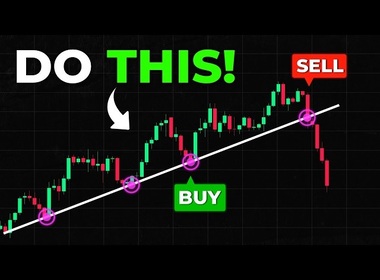
Support and resistance: Moving averages often act as dynamic levels.
Signal generation: Crossovers provide entry and exit points.
Risk management: Stop-losses can be aligned with moving averages.
Section 6: Moving Average Crossover System
A crossover occurs when a short-term moving average crosses a long-term moving average.
Bullish crossover: Short-term MA rises above long-term MA → Buy signal.
Bearish crossover: Short-term MA falls below long-term MA → Sell signal.
Popular combinations:
- 9-day EMA with 21-day EMA (short-term trades).
- 25-day EMA with 50-day EMA (medium-term trades).
- 50-day EMA with 100-day EMA (swing trades).
- 100-day EMA with 200-day EMA (long-term investments).
Section 7: Practical Examples
Bullish trade: Stock price crosses above 50-day EMA, confirming trend strength.
Bearish trade: Price falls below 200-day EMA, signaling long-term weakness.
Intraday setup: 5×10 EMA crossover on 15-minute charts for quick trades.
Section 8: Strengths and Weaknesses of Crossover Systems
Strengths: Clear signals, easy to implement, adaptable to multiple timeframes.
Weaknesses: Generates false signals in sideways markets, requires discipline to follow consistently.
Section 9: Combining Moving Averages with Other Tools
Candlestick patterns: Confirm signals with bullish or bearish formations.
Volume analysis: High volume strengthens crossover reliability.
Support/resistance: Align moving averages with key levels for stronger setups.
Indicators: RSI, MACD, or Bollinger Bands can add confirmation.
Section 10: Moving Averages Across Timeframes
Intraday traders: Use 5, 10, or 15-minute charts with short EMAs.
Swing traders: Daily charts with 25×50 EMA crossovers.
Investors: Weekly or monthly charts with 100×200 EMA crossovers.
Section 11: Avoiding Common Mistakes
Overloading charts with too many moving averages.
Ignoring market context (trending vs. sideways).
Treating moving averages as exact points rather than zones.
Neglecting volume confirmation.
Section 12: Advanced Applications
Trailing stop-loss: Adjust stops based on moving average levels.
Multiple targets: Use successive moving averages as step-by-step profit targets.
Confluence trading: Combine moving averages with other indicators for stronger signals.
Section 13: Psychological Aspect
Moving averages reflect collective trader psychology:
Above MA = optimism and buying interest.
Below MA = pessimism and selling pressure.
Section 14: Checklist for Moving Average Trading
Identify trend direction.
Confirm with crossover signals.
Align with candlestick patterns.
Check volume support.
Ensure favorable risk-to-reward ratio.
Conclusion
Moving averages are timeless tools in technical analysis. They help traders identify trends, manage risk, and maintain discipline. By combining SMA, EMA, and crossover systems with candlestick patterns and volume analysis, traders can build robust strategies for intraday, swing, and long-term trading.