Introduction
Candlestick charts are one of the most widely used tools in technical analysis. They provide traders with a visual representation of price action and market psychology. Among the many candlestick formations, single candlestick patterns stand out for their simplicity and ability to capture sentiment in just one candle.
Two of the most important single candlestick patterns are the Spinning Top and the Doji. Both are known for signaling indecision in the market, but they differ slightly in structure and interpretation. In this article, we’ll explore these patterns in detail, understand their psychology, learn how to trade them, and discuss their strengths and limitations.
What Are Single Candlestick Patterns?
Definition: A single candlestick pattern is formed from one trading session’s price movement.
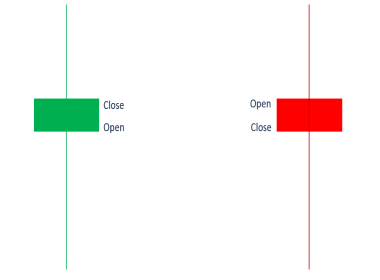
Components: Each candle reflects the open, high, low, and close (OHLC) values.
Interpretation:
- Long bodies = strong conviction.
- Short bodies = indecision or weak activity.
These patterns are often used as signals for potential reversals or continuation depending on the broader trend.
The Spinning Top Candlestick
The Spinning Top is characterized by a small real body and long upper and lower shadows that are nearly equal in length. This structure indicates that neither buyers nor sellers could dominate the session.
Key Features
- Small real body (open and close are close together).
- Upper and lower shadows of similar length.
- Color of the candle (bullish or bearish) is less important than its structure.
Market Psychology
- Buyers attempted to push prices higher but failed to sustain momentum.
- Sellers tried to drag prices lower but also failed to maintain control.
- The result is indecision, where neither side has a clear advantage.
Spinning Tops in Different Trends
1. In a Downtrend
- Bears are usually in control during a downtrend.
- A spinning top here suggests consolidation — sellers may be pausing, while buyers attempt to resist further decline.
Outcome possibilities:
- Continuation of the downtrend.
- Reversal into an uptrend.
Traders often reduce position size or enter cautiously, waiting for confirmation.
2. In an Uptrend
- Bulls dominate during an uptrend.
- A spinning top signals fatigue among buyers or entry of sellers.
Outcome possibilities:
- Continuation of the rally after consolidation.
- Correction or reversal if sellers gain strength.
Traders may book partial profits or tighten stop-losses to manage risk.
The Doji Candlestick
The Doji is similar to the spinning top but has no real body. This means the open and close prices are virtually the same.
Key Features
- Open and close are equal or nearly equal.
- Shadows can be long or short.
- Color is irrelevant since the body is absent.
Market Psychology
- Buyers and sellers are evenly matched.
- Neither side manages to push the market decisively.
- The Doji represents pure indecision and often appears at turning points.
Doji in Different Trends
1. In a Downtrend
- Appearing after a decline, a Doji may signal that sellers are losing strength.
- Buyers may step in, leading to a potential reversal.
- However, continuation is equally possible — traders must wait for confirmation.
2. In an Uptrend
- A Doji after a rally suggests buyers are exhausted.
- Sellers may attempt to take control, leading to a correction.
- Alternatively, the rally may resume after consolidation.
Trading Strategies with Spinning Tops and Doji
1. Entry Points
- Avoid trading these patterns in isolation.
- Combine with trendlines, support/resistance, or indicators (RSI, MACD).
- Enter trades only after confirmation from subsequent candles.
2. Stop-Loss Placement
- For bullish trades, place stop-loss below the low of the pattern.
- For bearish trades, place stop-loss above the high of the pattern.
3. Position Sizing
- Reduce position size when trading indecision candles.
- Consider entering with half the intended quantity until trend direction is clear.
Practical Examples
Spinning Top in Downtrend: A stock falls steadily, then forms a spinning top. Traders may cautiously buy small quantities, anticipating reversal, but exit quickly if decline resumes.
Doji in Uptrend: A stock rallies strongly, then prints a Doji. Traders may book partial profits, expecting possible correction, while keeping some holdings in case the rally continues.
Advantages
- Easy to identify visually.
- Provide early warnings of potential reversals.
- Work across multiple timeframes (daily, weekly, intraday).
- Useful for risk management when combined with other tools.
Limitations
- Do not provide profit targets.
- Can lead to false signals in volatile markets.
- Require confirmation from subsequent price action.
- Should not be traded in isolation.
Key Takeaways
- Spinning Tops = indecision with small body and equal shadows.
- Doji = pure indecision with no body.
- Both patterns signal uncertainty and can precede reversals or continuations.
- Always use confirmation and combine with other analysis tools.
- Manage risk with stop-losses and cautious position sizing.