Introduction
Technical analysis is a cornerstone of modern trading. Among its foundational frameworks, Dow Theory remains one of the most influential. Traders worldwide rely on its principles to interpret market behavior, identify opportunities, and manage risk. While the original theory dates back more than a century, its relevance persists because markets continue to exhibit repetitive patterns of accumulation, distribution, and trend progression.
In this article, we will explore the practical application of Dow Theory in contemporary trading. We’ll cover trading ranges, breakouts, flag formations, and the reward-to-risk ratio (RRR). By the end, you’ll have a structured understanding of how to integrate these concepts into your trading checklist for more disciplined decision-making.
1. Understanding Trading Ranges
What is a Trading Range?
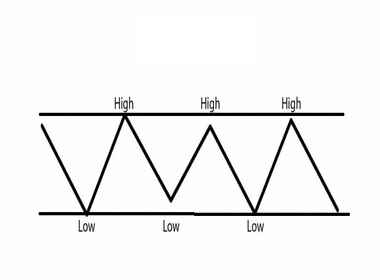
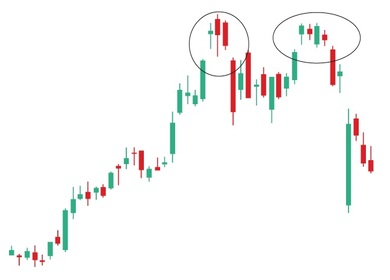
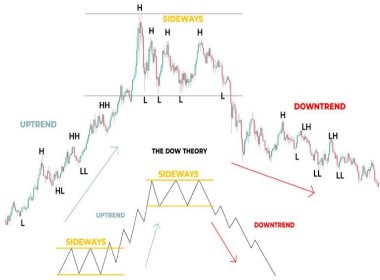
A trading range occurs when a stock oscillates between two price levels—support at the bottom and resistance at the top—without establishing a clear trend. This sideways movement reflects indecision in the market. Buyers and sellers are evenly matched, and neither side has enough conviction to push prices into a sustained trend.
Support: The lower boundary where buying interest prevents further decline.
Resistance: The upper boundary where selling pressure caps upward movement.
Width of the Range: The distance between support and resistance, which defines the potential profit zone for range traders.
Why Do Ranges Form?
- Lack of fundamental triggers – When no major events (earnings, product launches, mergers) are influencing sentiment, prices stagnate.
- Anticipation of announcements – Traders wait for clarity before committing capital, leading to sideways drift until news breaks.
How Traders Use Ranges
- Buy near support, sell near resistance.
- Short near resistance, cover near support.
- Candlestick confirmation near boundaries improves trade probability.
Ranges can last weeks, months, or even years. The longer the duration, the more significant the eventual breakout.
2. Breakouts: The Gateway to New Trends
What is a Breakout?
A breakout occurs when price decisively moves beyond the established range. This signals the start of a new trend—either upward (bullish breakout) or downward (bearish breakdown).
Think of a breakout as pressure escaping from a chamber. The longer the compression, the stronger the release.
Characteristics of a True Breakout
- High volume.
- Strong momentum.
False Breakouts
Not all breakouts are genuine. A false breakout happens when price briefly moves beyond support or resistance but quickly returns to the range.
Low volume often accompanies false moves.
Trading Breakouts
Entry: Buy when price closes above resistance with strong volume.
Stop-loss: Place just below the breakout level.
Target: Minimum expectation equals the width of the prior range.
Example:
Range between ₹128 and ₹165 (width = ₹37).
Breakout at ₹165 → Target = ₹165 + ₹37 = ₹202.
3. Flag Formations: Continuation Patterns
What is a Flag Pattern?
A flag formation is a short-term consolidation that occurs after a steep rally. It resembles a flag on a pole:
Pole: The sharp upward move.
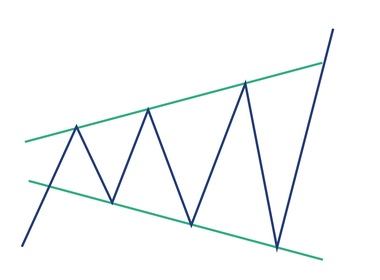
Flag: A brief decline or sideways drift within parallel lines.
Why Flags Form
After a strong rally, retail traders often book profits, causing temporary declines. However, institutional investors remain invested. Once profit-taking subsides, prices resume upward.
Trading Flags
Entry: Buy when price breaks out of the flag’s upper boundary.
Stop-loss: Place below the flag’s lower boundary.
Target: Often equals the length of the pole added to the breakout point.
4. Reward-to-Risk Ratio (RRR): The Trader’s Compass
What is RRR?
The reward-to-risk ratio measures the potential gain relative to the potential loss in a trade.
Reward = Target price – Entry price
Risk = Entry price – Stop-loss
Risk = ₹5, Reward = ₹7 → RRR = 1.4
Why RRR Matters
Even with a modest win rate, favorable RRR keeps traders profitable.
Setting RRR Thresholds
- Conservative traders: RRR ≥ 2
- Moderate traders: RRR ≥ 1.5
- Aggressive traders: RRR ≥ 1
5. Integrating Dow Theory into a Trading Checklist
- Candlestick confirmation.
- Support & Resistance alignment.
- Volume analysis.
- Trend perspective.
- RRR validation.
6. Primary vs Secondary Trends
Primary Trend
The dominant direction over months or years.
Secondary Trend
Counter-moves within the primary trend.
7. Practical Applications
Example 1: Range Breakout
Stock trades between ₹200–₹250, breaks out with volume, target ₹300.
Example 2: Flag Formation
Pole = ₹50, breakout target = ₹195.
Example 3: RRR Evaluation
Risk ₹10, Reward ₹20 → RRR = 2.
8. Common Mistakes Traders Make
- Ignoring volume.
- Chasing trades.
- Skipping stop-losses.
- Overtrading ranges.
- Confusing trend levels.
9. Risk Management and Psychology
- Stick to your checklist.
- Accept losses.
- Limit risk per trade.
- Be patient.
10. Conclusion
Dow Theory provides traders with a timeless framework to interpret market behavior. By mastering trading ranges, breakouts, flag formations, and RRR, you can build a robust trading strategy. Combined with discipline and risk management, these tools enhance your probability of success.
Whether you are a beginner or an experienced trader, integrating Dow Theory into your checklist ensures that your decisions are systematic, evidence-based, and aligned with long-term profitability.