The Long and Short Strangle Strategy in Options Trading
Introduction
Options trading is one of the most versatile areas of financial markets, offering traders the ability to profit from volatility, hedge risks, or generate income. Among the many strategies available, the strangle strategy—both long and short—stands out for its simplicity and effectiveness in capturing market moves. While the straddle is often the first volatility-based strategy traders learn, the strangle provides a cost-efficient alternative with unique advantages and trade-offs.
This article explores the long strangle and short strangle strategies in detail, including their mechanics, payoff structures, risk profiles, and practical applications. By the end, you’ll understand how to deploy these strategies, when to use them, and what risks to watch out for.
1. Understanding the Basics of Options
Before diving into strangles, let’s quickly recap the fundamentals of options:
- Call Option: Gives the buyer the right (not obligation) to purchase the underlying asset at a specified strike price before expiry.
- Put Option: Gives the buyer the right (not obligation) to sell the underlying asset at a specified strike price before expiry.
- Premium: The price paid to acquire the option.
- Strike Price: The predetermined price at which the option can be exercised.
- Expiry: The date when the option contract ceases to exist.
Options derive their value from factors such as the underlying asset’s price, volatility, time to expiry, and interest rates. Traders use combinations of calls and puts to create strategies tailored to different market conditions.
2. What is a Strangle?
A strangle is an options strategy that involves buying or selling out-of-the-money (OTM) call and put options with the same expiry date and underlying asset. Unlike a straddle, which uses at-the-money (ATM) strikes, the strangle uses strikes that are further away from the current market price.
Long Strangle: Buying both an OTM call and an OTM put.
Short Strangle: Selling both an OTM call and an OTM put.
The choice between long and short depends on whether the trader expects volatility to increase or decrease.
3. Long Strangle Strategy
3.1 Definition
A long strangle is a volatility-based strategy where the trader buys an OTM call and an OTM put. The expectation is that the underlying asset will make a significant move in either direction before expiry.
3.2 Mechanics
- Buy 1 OTM Call (strike above current price).
- Buy 1 OTM Put (strike below current price).
- Both options must have the same expiry and underlying.
3.3 Example
Suppose Nifty is trading at 18,000.
- Buy 18,200 Call at ₹50.
- Buy 17,800 Put at ₹60.
Total premium paid = ₹110.
Breakeven Points:
Upper Breakeven = 18,200 + 110 = 18,310.
Lower Breakeven = 17,800 – 110 = 17,690.
Maximum Loss: Limited to the premium paid (₹110).
Maximum Profit: Unlimited if the market moves sharply in either direction.
3.4 Payoff Characteristics
- Loss is capped at the premium paid.
- Profits are unlimited if the market rallies or crashes.
- Requires significant movement to overcome the premium cost.
3.5 When to Use
- Ahead of major events (earnings, budget announcements, policy decisions).
- When implied volatility is low but expected to rise.
- When the trader is unsure of direction but confident about volatility.
4. Short Strangle Strategy
4.1 Definition
A short strangle is the opposite of the long strangle. Here, the trader sells an OTM call and an OTM put, expecting the underlying to remain range-bound.
4.2 Mechanics
- Sell 1 OTM Call (strike above current price).
- Sell 1 OTM Put (strike below current price).
- Same expiry and underlying.
4.3 Example
Suppose Nifty is trading at 18,000.
- Sell 18,200 Call at ₹50.
- Sell 17,800 Put at ₹60.
Total premium received = ₹110.
Breakeven Points:
Upper Breakeven = 18,200 + 110 = 18,310.
Lower Breakeven = 17,800 – 110 = 17,690.
Maximum Profit: Limited to the premium received (₹110).
Maximum Loss: Unlimited if the market moves sharply beyond breakeven points.
4.4 Payoff Characteristics
- Profits are capped at the premium received.
- Losses can be unlimited if the market breaks out.
- Works best in low-volatility, range-bound markets.
4.5 When to Use
- When implied volatility is high but expected to fall.
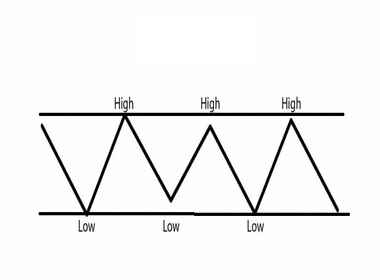
- In sideways markets with no major events.
- When the trader expects the underlying to stay within a defined range.
5. Comparing Long vs Short Strangle
| Feature | Long Strangle | Short Strangle |
|---|---|---|
| Cost | Premium Paid | Premium Received |
| Risk | Limited | Unlimited |
| Reward | Unlimited | Limited |
| Best Market Condition | High volatility expected | Low volatility expected |
| Trader Outlook | Unsure of direction, expects big move | Confident in range-bound market |
6. Advantages and Disadvantages
Long Strangle
Advantages:
- Limited risk.
- Unlimited profit potential.
- Simple to execute.
Disadvantages:
- Requires large movement to be profitable.
- Time decay works against the position.
Short Strangle
Advantages:
- Generates income in stable markets.
- Profits from time decay.
- Flexible strike selection.
Disadvantages:
- Unlimited risk.
- Vulnerable to sudden breakouts.
- Requires margin and close monitoring.
7. Role of Greeks in Strangles
Options Greeks play a crucial role in managing strangles:
- Delta: Measures sensitivity to price changes. Long strangles are delta-neutral at initiation.
- Theta: Time decay hurts long strangles but benefits short strangles.
- Vega: Long strangles benefit from rising volatility; short strangles suffer.
- Gamma: Long strangles gain from sharp moves; short strangles lose.
Understanding Greeks helps traders adjust positions and manage risks effectively.
8. Practical Applications
- Event Trading: Long strangles around earnings or policy announcements.
- Income Generation: Short strangles in calm markets.
- Hedging: Long strangles to protect portfolios against unexpected volatility.
- Range Trading: Short strangles when technical analysis shows strong support/resistance levels.
9. Risk Management
Risk management is critical in strangle strategies:
- Position Sizing: Never risk more than a small percentage of capital.
- Stop Losses: Define exit points to prevent runaway losses.
- Hedging: Use additional options (like buying far OTM options) to cap risk in short strangles.
- Volatility Analysis: Monitor implied volatility and adjust accordingly.
10. Conclusion
The strangle strategy is a powerful tool in options trading, offering traders the ability to profit from volatility or generate income in range-bound markets. The long strangle is ideal when expecting sharp moves, while the short strangle suits calm, sideways markets. However, both strategies require careful planning, risk management, and an understanding of market conditions.
By mastering strangles, traders can add a versatile weapon to their trading arsenal, balancing risk and reward in dynamic markets.