Theta in Options Trading: A Complete Guide to Time Decay
Introduction
Options trading is a fascinating world where mathematics, psychology, and market dynamics intersect. Among the many concepts that traders must master, Theta—often referred to as the "time decay Greek"—is one of the most crucial. Understanding Theta allows traders to anticipate how the value of an option changes as time passes, even if the underlying asset remains unchanged. This article provides a comprehensive, SEO-friendly exploration of Theta, its mechanics, its impact on buyers and sellers, and strategies to harness it effectively.
1. What Is Theta?
Theta measures the rate at which an option’s premium decreases as time moves closer to expiration, assuming all other factors remain constant. In simpler terms, it quantifies the erosion of an option’s value due to the passage of time.
For option buyers: Theta is a cost. Every day that passes reduces the value of the option they hold.
For option sellers: Theta is a benefit. Sellers profit as the option loses value, provided the underlying asset does not move against them.
Mathematically, Theta is expressed as the change in option price per day. For example, if an option has a Theta of -0.50, its premium will decline by 0.50 units each day, all else being equal.
2. Why Does Time Decay Exist?
Options are contracts with a finite lifespan. The closer they get to expiration, the less time remains for the underlying asset to move favorably. This shrinking window of opportunity reduces the option’s extrinsic value (time value).
Early in the contract: Time decay is slow.
Closer to expiration: Time decay accelerates rapidly.
This behavior is often visualized in a curve where the decline in premium steepens as expiration approaches.
3. Intrinsic Value vs. Time Value
To understand Theta, it’s essential to distinguish between intrinsic value and time value:
Intrinsic Value: The amount an option is in-the-money (ITM). For a call option, it’s the difference between the spot price and strike price if positive. For a put option, it’s the strike price minus the spot price if positive.
Time Value: The portion of the premium that reflects the probability of the option gaining intrinsic value before expiration.
Theta only affects the time value portion of the premium. Once expiration arrives, time value becomes zero, leaving only intrinsic value.
4. How Theta Behaves Across Different Options
Theta does not impact all options equally. Its effect varies depending on whether the option is ITM, ATM, or OTM.
At-the-money (ATM): Highest time decay. Since ATM options are most sensitive to small movements in the underlying, their premiums erode fastest as expiration nears.
Out-of-the-money (OTM): Moderate decay. OTM options have no intrinsic value, so their premiums consist entirely of time value.
In-the-money (ITM): Lower decay. ITM options retain intrinsic value, so time decay affects them less compared to ATM options.
5. Theta and Option Buyers
For buyers, Theta is a silent adversary. Even if the underlying asset remains stable, the option premium declines daily.
Challenges for Buyers:
- Holding options for long periods without significant price movement leads to losses.
- Buying options close to expiration is risky because time decay accelerates.
Best Practices:
- Use options for short-term directional plays.
- Avoid holding options too close to expiration unless expecting sharp moves.
- Consider spreads to offset Theta decay.
6. Theta and Option Sellers
For sellers, Theta is a powerful ally. Since sellers collect premiums upfront, time decay works in their favor.
Advantages for Sellers:
- Each passing day increases the likelihood of retaining the premium.
- Selling options closer to expiration can be profitable due to rapid time decay.
Risks:
- Unlimited risk if the underlying moves sharply against the position.
- Requires margin and risk management discipline.
7. Practical Examples of Theta
Spot price: 10,000
Strike price: 10,200 Call Option
Premium: 150
Theta: -5
This means the option loses 5 units of value per day. After 10 days, if the underlying remains unchanged, the premium will drop to 100.
For the seller, this decay represents profit. For the buyer, it’s a loss unless the underlying moves favorably.
8. Weekend and Holiday Effects
Theta decay continues even during non-trading days like weekends and holidays. Since Theta is calculated on a calendar-day basis, option premiums reflect this decay when markets reopen.
9. Strategies to Harness Theta
For Buyers:
- Buy long-dated options (LEAPS): Slower time decay.
- Trade intraday moves: Minimize exposure to overnight Theta.
- Use spreads: Offset Theta by selling another option.
For Sellers:
- Short straddles/strangles: Benefit from rapid time decay.
- Covered calls: Generate income while holding stock.
- Iron condors: Profit from range-bound markets with Theta advantage.
10. Theta in Weekly vs. Monthly Options
Weekly options experience faster Theta decay compared to monthly contracts because of their shorter lifespan. Traders often exploit this by selling weekly options to capture rapid time erosion.
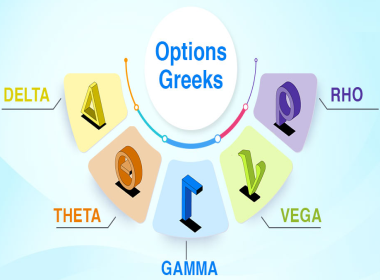
11. Relationship Between Theta and Other Greeks
Theta does not work in isolation. It interacts with other Greeks:
- Delta: Measures sensitivity to price changes.
- Gamma: Measures rate of change of Delta.
- Vega: Measures sensitivity to volatility.
For example, a rise in volatility can offset Theta decay, while strong price movement can overpower time erosion.
12. Psychological Impact of Theta
Many novice traders underestimate Theta. Buyers often hold losing positions, hoping for a turnaround, only to see premiums vanish. Sellers, on the other hand, may become overconfident, ignoring the risks of sharp market moves. Understanding Theta helps traders maintain discipline and realistic expectations.
13. Advanced Applications of Theta
- Portfolio Hedging: Sellers use Theta to generate consistent income.
- Calendar Spreads: Exploit differences in Theta between near-term and long-term options.
- Theta Scalping: Adjusting positions daily to capture incremental decay.
14. Common Misconceptions
- “Theta only matters at expiration.” False. Theta affects premiums daily.
- “OTM options don’t lose value.” False. OTM options consist entirely of time value, which erodes completely.
- “Sellers always win with Theta.” False. Sharp moves in the underlying can wipe out Theta gains.
15. Conclusion
Theta is the heartbeat of options trading. It represents the relentless march of time and its impact on option premiums. For buyers, it’s a cost that must be managed carefully. For sellers, it’s a source of profit but requires risk control. Mastering Theta is essential for anyone serious about trading options. By understanding its mechanics, behavior, and strategies, traders can transform time decay from a hidden enemy into a predictable ally.