Trading Biases: How Psychology Shapes Investment Decisions
Introduction
Trading and investing are often portrayed as battles against market volatility, economic cycles, and unpredictable events. Yet, the most formidable opponent is not the market itself—it is the human mind. Traders and investors frequently fall prey to psychological biases that distort judgment, influence decision-making, and ultimately impact profitability.
This article explores the most common trading biases, how they manifest in real-world scenarios, and strategies to overcome them. By understanding these mental traps, investors can build a disciplined, data-driven approach that enhances long-term success.
1. The Hidden Power of Forgetfulness in Investing
One of the most fascinating stories in financial circles involves investors who accidentally hold onto stocks for decades, only to discover immense wealth later. The phenomenon highlights a paradox: sometimes, forgetting about an investment can be more profitable than actively managing it.
Why Forgetfulness Works
Reduced emotional interference: Investors who ignore daily price movements avoid panic selling during downturns.
Compounding effect: Long-term holding allows dividends and capital appreciation to compound exponentially.
Avoidance of premature exits: Many investors sell after modest gains (50–200%), missing out on multi-bagger returns.
Lesson for Traders
While “forgetting” is not a strategy, the principle underscores the danger of over-monitoring. Constantly tracking prices can trigger biases such as fear, greed, or overconfidence. A disciplined long-term perspective often yields better results than hyperactive trading.
2. Illusion of Control: The Trap of Complex Analysis
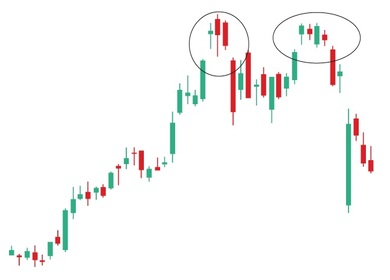
Modern trading platforms offer dozens of indicators—candlestick patterns, Bollinger Bands, Fibonacci retracements, pivot points, stochastic oscillators, and more. While these tools provide insights, they also create a psychological illusion: the belief that complexity equals control.
Characteristics of Illusion of Control
Overconfidence in predictions: Traders make bold claims like “this stock will never cross 500,” based on chart setups.
Attraction to complexity: The more indicators on a chart, the stronger the feeling of mastery.
False sense of invincibility: Traders believe they can outsmart the market simply by interpreting complex data.
Why It’s Dangerous
Markets are inherently uncertain. No matter how many indicators are used, outcomes remain probabilistic. Overloading charts with data often leads to analysis paralysis or misplaced confidence.
How to Overcome It
Simplify analysis: Focus on a few reliable indicators rather than dozens.
Rely on statistics: Evaluate strategies based on historical win rates and risk-reward ratios.
Stay humble: Accept that no trader can control all outcomes.
3. Recency Bias: The Weight of the Latest Event
Recency bias occurs when traders give disproportionate importance to the most recent information, ignoring historical context. For example, a sudden green candle after a steep decline may tempt investors to believe a recovery is imminent, even if fundamental issues persist.
Real-World Examples
Corporate governance scandals: Investors may overlook long-term risks after a short-term price bounce.
Earnings surprises: A single strong quarter can overshadow years of weak performance.
Market crashes: Traders extrapolate recent losses into the future, assuming the decline will continue indefinitely.
Why Recency Bias Persists
Human brains are wired to prioritize fresh information. In fast-moving markets, this instinct feels logical but often leads to poor decisions.
Strategies to Counter Recency Bias
Zoom out: Analyze long-term charts and fundamentals rather than focusing on daily movements.
Maintain investment theses: Stick to pre-defined rules about when to enter or exit positions.
Document decisions: Writing down rationales helps prevent impulsive reactions to short-term events.
4. Common Trading Biases Beyond Illusion of Control and Recency
a. Confirmation Bias
Traders seek information that validates their existing beliefs. For instance, a bullish investor may ignore negative news and only highlight positive analyst reports.
Solution: Actively search for opposing viewpoints before making decisions.
b. Loss Aversion
The pain of losing money is psychologically stronger than the joy of gaining. This bias leads traders to hold losing positions too long, hoping for a rebound.
Solution: Use stop-loss orders and predefined exit strategies.
c. Anchoring Bias
Investors fixate on a specific price level (e.g., the purchase price) and make decisions around it, even when market conditions change.
Solution: Reassess positions based on current fundamentals, not past prices.
d. Herd Mentality
Following the crowd often leads to bubbles or panic selling. Traders buy because “everyone else is buying,” not because of sound analysis.
Solution: Develop independent research and avoid decisions based solely on market sentiment.
5. The Psychology of Long-Term Wealth Creation
Biases are most destructive when they interfere with compounding—the engine of wealth creation. Investors who resist biases and stay disciplined often achieve extraordinary results.
Key Principles
Patience: Wealth grows exponentially over decades, not months.
Consistency: Regular investments reduce the impact of timing errors.
Detachment: Emotional distance from daily price swings prevents rash decisions.
6. Building a Bias-Free Trading Framework
Step 1: Define Clear Rules
Entry criteria (technical or fundamental signals)
Exit criteria (profit targets, stop-loss levels)
Position sizing rules
Step 2: Use Data-Driven Backtesting
Evaluate strategies on historical data to understand probabilities and risks.
Step 3: Maintain a Trading Journal
Document trades, rationales, and emotional states. Reviewing journals reveals patterns of bias.
Step 4: Automate Where Possible
Algorithmic trading reduces emotional interference by executing predefined rules.
Step 5: Continuous Education
Stay updated on behavioral finance research to recognize new biases.
7. Case Studies: Biases in Action
Case Study 1: The Forgotten Fortune
An investor discovers decades-old shares worth millions. The wealth was created not by skill but by avoiding biases through neglect.
Lesson: Sometimes, inactivity beats over-analysis.
Case Study 2: The Overloaded Chartist
A trader uses 10 indicators simultaneously, convinced of predictive power. Despite confidence, trades fail due to conflicting signals.
Lesson: Complexity does not equal accuracy.
Case Study 3: The Recency Trap
An investor holds onto a scandal-ridden company after a short-term bounce, ignoring governance issues. Losses deepen over time.
Lesson: Short-term optimism cannot override long-term risks.
8. Practical Exercises to Identify Biases
Bias Checklist: Before each trade, ask: Am I influenced by recent news, crowd behavior, or overconfidence?
Scenario Planning: Consider multiple outcomes instead of fixating on one.
Mindfulness Practices: Meditation or journaling can reduce emotional reactivity.
9. The Role of Technology in Reducing Bias
Modern trading platforms offer tools to counter biases:
Automated alerts: Prevent impulsive trades by enforcing rules.
Risk calculators: Quantify exposure before entering trades.
AI-driven analytics: Provide objective insights, reducing reliance on subjective judgment.
10. Conclusion
Trading biases are invisible forces that shape decisions, often leading investors astray. Recognizing and countering these biases is essential for building sustainable wealth. The path to success lies not in controlling the market but in controlling the mind.
By simplifying analysis, resisting recency bias, and adopting a disciplined framework, traders can transform psychological pitfalls into opportunities for growth.