Introduction
Technical analysis is the backbone of modern trading. While price charts and candlestick patterns provide the foundation, indicators act as powerful tools that help traders interpret market behavior more effectively. Among the most widely used indicators is the Relative Strength Index (RSI), a momentum oscillator that has stood the test of time. In this article, we will explore RSI in depth, understand how momentum works, and learn how traders can use these tools to identify opportunities, manage risks, and refine their strategies.
What Are Technical Indicators?
Technical indicators are mathematical calculations applied to price, volume, or open interest data. They are designed to provide insights into market trends, momentum, volatility, and potential reversals. Indicators are generally divided into two categories:
- Leading Indicators: Predict future price movements by signaling reversals or new trends before they occur.
- Lagging Indicators: Confirm existing trends after they have already started, helping traders validate their decisions.
RSI falls into the category of a leading momentum indicator, making it particularly useful for spotting potential turning points in the market.
Momentum: The Core Concept
Momentum refers to the speed at which prices change. A stock rising from ₹100 to ₹115 in three days shows strong momentum compared to the same rise over three months. High momentum indicates aggressive buying or selling pressure, while low momentum suggests a lack of conviction among traders.
Momentum indicators like RSI help traders quantify this rate of change, offering a structured way to evaluate whether a stock is overbought or oversold.
Relative Strength Index (RSI): An Overview
Developed by J. Welles Wilder in 1978, RSI is one of the most popular oscillators in technical analysis. It measures the magnitude of recent price changes to evaluate whether a stock is trading in an overbought or oversold condition.
- Scale: RSI oscillates between 0 and 100.
- Default Lookback Period: 14 days (though traders can adjust this to suit their strategy).
Key Levels:
- Below 30 → Oversold (potential buying opportunity).
- Above 70 → Overbought (potential selling opportunity).
How RSI Is Calculated
The formula for RSI involves two steps:
Relative Strength (RS) = Average Gain ÷ Average Loss
RSI = 100 – [100 ÷ (1 + RS)]
For example, if the average gain over 14 days is 2.07 and the average loss is 0.71, RS = 2.899. Plugging this into the formula gives RSI ≈ 74.35, which indicates an overbought condition.
Classical Interpretation of RSI
Traditionally, RSI is interpreted as follows:
- RSI < 30: The stock is oversold, suggesting a possible upward correction.
- RSI > 70: The stock is overbought, suggesting a possible downward correction.
- RSI between 30–70: Neutral zone, often less useful for trading decisions.
However, traders must remember that RSI is not infallible. It should be combined with other tools like candlestick patterns, support and resistance levels, and volume analysis for confirmation.
Advanced Interpretations of RSI
Prolonged Overbought Conditions
If RSI remains above 70 for weeks, it may indicate strong bullish momentum rather than an immediate reversal.
Example: A stock in a long-term uptrend may stay “overbought” while continuing to rise.
Prolonged Oversold Conditions
RSI stuck below 30 for an extended period can signal persistent bearish momentum.
Example: A weak stock may remain oversold while continuing to decline.
Breakouts from Extremes
RSI moving above 30 after a long time in oversold territory may indicate a bottoming out.
RSI dropping below 70 after a long time in overbought territory may indicate topping out.
RSI Divergence
- Bullish Divergence: Price makes lower lows while RSI makes higher lows → potential upward reversal.
- Bearish Divergence: Price makes higher highs while RSI makes lower highs → potential downward reversal.
RSI in Different Market Conditions
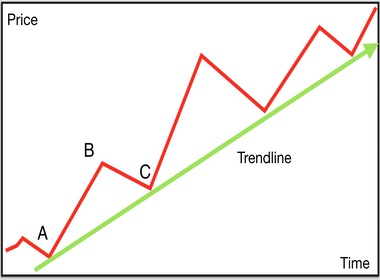
- Trending Markets: RSI can remain in extreme zones for long periods. Traders should avoid counter-trend trades and instead align with momentum.
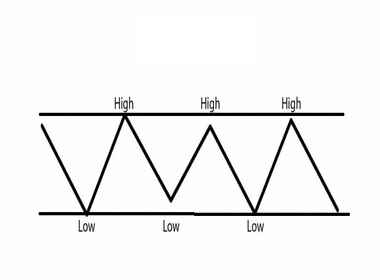
- Sideways Markets: RSI provides stronger signals in range-bound conditions, helping traders identify short-term reversals.
- Volatile Markets: Shorter lookback periods (e.g., 7 days) can make RSI more responsive, though at the cost of increased noise.
Combining RSI with Other Indicators
RSI is rarely used in isolation. Traders often combine it with:
- Moving Averages: To confirm trend direction.
- MACD (Moving Average Convergence Divergence): To validate momentum shifts.
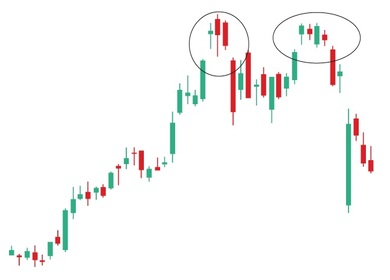
- Candlestick Patterns: For double confirmation (e.g., bullish engulfing + RSI < 30).
- Support & Resistance Levels: To identify high-probability entry and exit points.
Practical Trading Strategies Using RSI
1. RSI Swing Trading Strategy
- Buy when RSI crosses above 30 from oversold territory.
- Sell when RSI crosses below 70 from overbought territory.
- Works best in sideways or moderately trending markets.
2. RSI Trend Continuation Strategy
- In strong uptrends, treat RSI > 70 as confirmation of bullish strength rather than a sell signal.
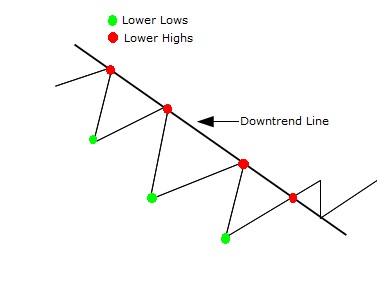
- In strong downtrends, treat RSI < 30 as confirmation of bearish strength rather than a buy signal.
3. RSI Divergence Strategy
- Look for divergences between price and RSI to anticipate reversals.
- Combine with candlestick confirmation for higher accuracy.
Common Mistakes Traders Make with RSI
- Treating RSI as a Standalone Tool: Ignoring other indicators leads to false signals.
- Rigidly Following 30/70 Levels: Market dynamics change; flexibility is key.
- Ignoring Market Context: RSI behaves differently in trending vs. sideways markets.
- Over-Optimization: Constantly tweaking RSI settings can lead to confusion rather than clarity.
Customizing RSI Settings
While Wilder suggested a 14-day lookback, traders can experiment with different settings:
- Shorter Periods (5–10 days): More sensitive, suitable for intraday trading.
- Longer Periods (20–100 days): Smoother signals, better for long-term investors.
- Custom Thresholds: Some traders use 20/80 instead of 30/70 for stricter signals.
Case Studies
Example 1: Bullish Signal
A stock’s RSI drops to 25, coinciding with a bullish engulfing candlestick. The combination suggests a strong buying opportunity, leading to a sharp rally.
Example 2: Bearish Signal
RSI rises to 82 while a bearish engulfing pattern forms. The alignment of signals suggests a shorting opportunity, followed by a quick correction.
Conclusion
RSI remains one of the most versatile and widely used indicators in technical analysis. By understanding its classical interpretation, advanced nuances, and practical applications, traders can significantly improve their decision-making process. However, RSI should never be used in isolation. Combining it with other tools and adapting it to market conditions is the key to success.