Volatility Applications in Options Trading: A Complete Guide
Introduction
Volatility is one of the most critical concepts in financial markets, especially in options trading. Traders often hear terms like standard deviation, normal distribution, and volatility index, but the real challenge lies in applying these concepts to practical trading strategies. This guide explores volatility applications in detail, focusing on two essential aspects:
- Selecting the right strike price for writing options.
- Using volatility to determine stop-loss levels.
By the end of this article, you’ll understand how traders use volatility to make informed decisions, manage risk, and improve consistency in their trades.
Understanding Volatility in Options
Volatility measures the expected fluctuation in the price of a stock or index. It reflects uncertainty and risk. In options trading, volatility directly impacts premiums, strike selection, and risk management.
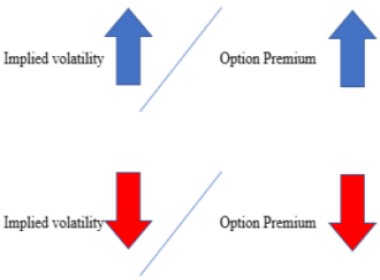
High volatility → Higher premiums, wider ranges, greater risk.
Low volatility → Lower premiums, narrower ranges, reduced risk.
Options writers (sellers) rely heavily on volatility to decide which strikes to sell. Buyers, on the other hand, use volatility to estimate the probability of their options expiring in-the-money.
Normal Distribution and Standard Deviation
The normal distribution curve (bell curve) is a statistical model that helps traders estimate probabilities.
- 1 Standard Deviation (SD): 68% probability that price stays within this range.
- 2 SD: 95% probability.
- 3 SD: 99.7% probability.
For example, if Nifty’s daily returns are normally distributed, traders can calculate the expected range for the index over a given period. This range helps identify safe strikes for writing options.
Application 1: Selecting the Right Strike to Write
One of the biggest challenges for option writers is choosing a strike price that balances risk and reward. Volatility analysis provides a systematic way to do this.
Step-by-Step Process
- Identify Current Price: Suppose Nifty is trading at 18,500.
- Calculate Daily Average Return and Daily SD: Assume daily average return = 0.05%, daily SD = 1%.
- Adjust for Days to Expiry: If expiry is 10 days away, SD = 1% × √10 = 3.16%.
- Calculate Expected Range:
Upper Range = Current Price × (1 + Average + SD).
Lower Range = Current Price × (1 + Average – SD).
This gives a range where Nifty is likely to trade with 68% probability. Strikes outside this range are less likely to be breached, making them ideal for writing.
Practical Example
If the calculated range is 18,000–19,000, then:
- Selling calls above 19,000 is relatively safe.
- Selling puts below 18,000 is also safe.
However, many traders prefer selling calls rather than puts because markets tend to fall faster than they rise. Panic spreads quickly, making puts riskier.
Why Call Writing is Preferred
- Greed vs Panic: Markets rise slowly due to greed but fall quickly due to panic.
- Risk Management: Selling calls requires the market to rise significantly, which is less frequent.
- Consistency: Call writing often provides steadier returns compared to put writing.
Timing the Trade
Timing is crucial in option writing. Experienced traders often wait until the last week before expiry to sell options.
Reason: Time decay (theta) accelerates near expiry, eroding premiums faster.
Strategy: Write options on Friday before expiry week to maximize theta advantage.
Premiums and Returns
Premiums collected from writing options may seem small in absolute terms but can provide significant returns relative to margin requirements.
For example:
- Premium collected = ₹200.
- Margin required = ₹12,000.
- Return = 1.6% in less than two weeks.
Annualized, this can translate to over 18% returns if done consistently.
Risk Considerations
Option writing is not risk-free. Traders must account for:
- Black Swan Events: Sudden, unpredictable market moves can wipe out months of profits.
- Events: Policy announcements, earnings, or geopolitical shocks can cause sharp volatility.
- Capital Allocation: Never risk more than a fixed percentage of capital on one trade.
Application 2: Volatility-Based Stop-Loss
Stop-loss is essential in trading. Many traders use fixed percentage stop-losses, but this approach ignores daily volatility. A volatility-based stop-loss is more logical.
How It Works
Calculate Daily Volatility: Suppose Airtel has daily volatility of 1.8%.
Adjust for Holding Period: For 5 days, volatility = 1.8% × √5 ≈ 4%.
Set Stop-Loss: Entry price = ₹395. Volatility = 4%.
Stop-loss = 395 – (4% of 395) = ₹379.
This ensures the stop-loss is outside normal price fluctuations, reducing the chance of premature exits.
Reward-to-Risk Ratio (RRR)
A good trade should have an RRR above 1.5.
Example: Entry = ₹395, Target = ₹417, Stop-loss = ₹375.
Risk = 20 points, Reward = 22 points.
RRR ≈ 1.1 (borderline).
Traders should aim for trades with RRR ≥ 1.5 for better consistency.
Key Takeaways
- Use standard deviation to identify safe strikes.
- Prefer call writing over put writing.
- Write options close to expiry for maximum theta benefit.
- Always account for black swan events.
- Use volatility-based stop-loss instead of fixed percentages.
- Allocate capital wisely across strategies.
Advanced Considerations
- 1 SD vs 2 SD: Writing options 1 SD away offers higher premiums but lower probability of success. Writing 2 SD away offers higher probability but lower premiums.
- Portfolio Diversification: Allocate capital across equities, mutual funds, and short-term strategies.
- Instrument Selection: Stick to liquid instruments like Nifty, Bank Nifty, and large-cap stocks.
Conclusion
Volatility is not just a theoretical concept—it is a practical tool for traders. By applying volatility to strike selection and stop-loss determination, traders can improve consistency, manage risk, and build confidence in their strategies. While option writing can provide steady returns, it requires discipline, risk management, and awareness of market events.