Volatility Basics: A Complete Guide for Traders
Introduction
Volatility is one of the most misunderstood yet crucial concepts in financial markets. Many traders assume volatility simply means “the market goes up and down.” While that’s partially true, volatility is far more nuanced. It represents the degree of risk, uncertainty, and potential price fluctuation in a stock, index, or any tradable asset. Understanding volatility equips traders with the ability to manage risk, identify opportunities, and apply option strategies more effectively.
In this comprehensive guide, we’ll explore volatility from the ground up. We’ll cover its definition, measurement techniques, practical applications, and its role in options pricing. By the end, you’ll have a clear framework to interpret volatility and use it to your advantage in trading.
1. What Is Volatility?
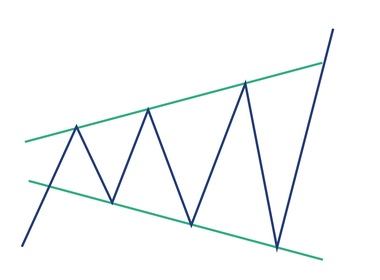
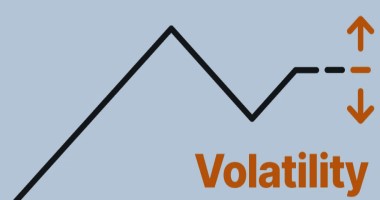
Volatility is a statistical measure of how much the price of an asset deviates from its average value over time. In simple terms, it tells us how “wild” or “calm” the price movements are.
- High volatility: Large swings in price, unpredictable movements, higher risk.
- Low volatility: Smaller, steadier price changes, more predictable behavior, lower risk.
For example, a stock that moves 10% in a day is considered highly volatile compared to another that moves only 1%.
2. Volatility vs. Risk
Volatility is often equated with risk. While not identical, they are closely related. Risk refers to the chance of losing money, and volatility quantifies the uncertainty of returns.
Consistent performer: A stock with low volatility may not deliver extraordinary gains but offers stability.
Unpredictable performer: A highly volatile stock can generate outsized profits but also exposes traders to steep losses.
Thus, volatility is essentially the “risk thermometer” of the market.
3. Measuring Volatility
Volatility is measured using variance and standard deviation. These statistical tools help quantify how far prices deviate from their average.
Variance
Variance is the average of squared deviations from the mean. It captures the spread of data points.
Variance = Σ (Xi − X̄)² / N
Standard Deviation
Standard deviation (SD) is the square root of variance. It provides a more intuitive measure of volatility in the same unit as the data (e.g., stock price).
SD = √Variance
For traders, SD is the most common way to express volatility.
4. Types of Volatility
- Historical Volatility (HV): Based on past price movements.
- Implied Volatility (IV): Derived from option prices, reflecting market expectations of future volatility.
- Realized Volatility: Actual volatility observed over a specific period.
- Forecasted Volatility: Estimated using models like GARCH or Monte Carlo simulations.
Each type serves a different purpose in trading and risk management.
5. Volatility in Options Trading
Volatility plays a central role in options pricing. One of the key Greeks, Vega, measures how sensitive an option’s premium is to changes in volatility.
- High IV: Options become expensive because the market expects larger price swings.
- Low IV: Options are cheaper, reflecting calmer market expectations.
Traders often exploit volatility differences by buying undervalued options or selling overpriced ones.
6. Practical Example: Consistency vs. Uncertainty
Imagine two batsmen in cricket:
Player A (consistent): Scores between 19–23 runs every match.
Player B (uncertain): Scores anywhere between 10–33 runs.
Although Player B has a higher average, Player A is more dependable. Similarly, in markets, a stock with lower volatility is more predictable, while a highly volatile stock carries uncertainty.
7. Volatility and Probability
Volatility allows traders to estimate the probability of price ranges using the normal distribution curve.
- 1 SD (68% confidence): Price likely stays within ±1 SD of the mean.
- 2 SD (95% confidence): Price likely stays within ±2 SD.
- 3 SD (99% confidence): Price almost certainly stays within ±3 SD.
This helps traders forecast ranges for stocks or indices over specific timeframes.
8. Annualized Volatility
Volatility is often expressed on an annual basis. For example, if Nifty has a volatility of 16.5%, it means the index is expected to move ±16.5% from its average price over a year. Traders can scale this down to shorter periods using square root of time adjustments.
9. Volatility and Market Sentiment
Volatility is not just a mathematical concept—it reflects investor psychology.
- High volatility: Fear, uncertainty, panic, or speculation dominate.
- Low volatility: Confidence, stability, and calmness prevail.
Indicators like the VIX (Volatility Index) are often called the “fear gauge” of markets.
10. Applications of Volatility
- Risk management: Helps set stop-loss levels and position sizing.
- Options trading: Guides strategies like straddles, strangles, and spreads.
- Portfolio diversification: Identifies assets with different volatility profiles.
- Market forecasting: Provides probability ranges for price movements.
11. Strategies Based on Volatility
- High volatility strategies: Buy options (long straddle, long strangle).
- Low volatility strategies: Sell options (iron condor, credit spreads).
- Volatility arbitrage: Exploit differences between implied and historical volatility.
12. Limitations of Volatility
- It does not predict direction (up or down).
- Sudden events (earnings, geopolitical shocks) can invalidate forecasts.
- Models assume normal distribution, but markets often exhibit “fat tails.”
13. Tools to Measure Volatility
- Bollinger Bands: Measure volatility using moving averages and SD.
- ATR (Average True Range): Captures daily price range volatility.
- Volatility cones: Show historical volatility ranges over time.
14. Volatility in Practice: Nifty and TCS Example
Suppose:
Nifty Spot = 8547, Volatility = 16.5%
TCS Spot = 2585, Volatility = 27%
Estimated ranges:
Nifty: 7136–9957
TCS: 1887–3282
This means Nifty is less risky compared to TCS, which has wider potential swings.
15. Key Takeaways
- Volatility measures risk and uncertainty.
- Standard deviation is the most common metric.
- Options pricing is heavily influenced by volatility.
- Traders can forecast ranges using probability distributions.
- Volatility strategies depend on whether markets are calm or turbulent.
Conclusion
Volatility is the heartbeat of financial markets. It reflects uncertainty, investor sentiment, and potential risk. By mastering volatility, traders can better manage risk, design profitable strategies, and gain confidence in navigating unpredictable markets. Whether you’re trading stocks, indices, or options, understanding volatility is essential for long-term success.